
THE COMMUNITY EMPOWERMENT THROUGH THE ROAD & ROLE MAP MODEL OF SUSTAINABLE ISLAMIC BOARDING SCHOOL BUSINESS RESILIENCE BASED ON A GREEN ECONOMY AT THE DAARUL ULUUM ISLAMIC BOARDING SCHOOL, JATINANGOR
DOI:
https://doi.org/10.53067/ije2.v3i3.138Keywords:
Boarding School , Business Resilience Models, Green EconomyAbstract
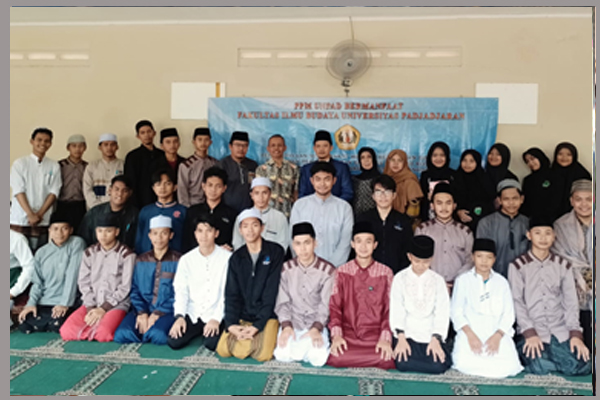
This community service activity aims to introduce the Road&Role Map Model for Community Empowerment Through Sustainable Islamic Boarding School Business Resilience Based on a Green Economy at the Daarul Uluum Islamic Boarding School, Jatinangor. At the Daarul Uluum Islamic boarding school in Jatinangor, this community service is carried out with the assistance of PAR. It consists of socialization, training, and assistance for teachers, students, and congregation members about community empowerment through sustainable Islamic boarding school business resilience based on a green economy. By utilizing Infocus and a projector, the material is presented in the form of a PowerPoint presentation.
The results of the activities carried out on November 18 2023, found that teachers, students and congregations for community empowerment through sustainable Islamic boarding school business resilience based on a green economy at the Daarul Uluum Jatinangor Islamic boarding school were more enthusiastic and motivated to recognize the Road Map & Role model for Islamic boarding school business resilience Sustainable Green Economy Based, further in its application and implementation in daily life, especially for the congregation at the Daarul Uluum Jatinangor Islamic Boarding School. As a result of this community service activity, it is possible to conclude that this outreach activity has the potential to increase enthusiasm and high motivation to recognize further the Arabic Hajj & Umrah Digital Application for Teachers, Santri and Jama'ah Road Map & Role Model for Community Empowerment Through Resilience-Based Sustainable Islamic Boarding School Business Green Economy at the Daarul Uluum Jatinangor Islamic Boarding School. The participants' enthusiasm was a defining characteristic of the event
Downloads
References
Annisa, A.A. (2019). Kopontren dan Ekosistem Halal Value Chain. Jurnal Ilmiah Ekonomi Islam, 5(01), 1-8. doi:http://dx.doi.org/10.29040/jiei.v5i01.398
Abdussalam, M.S. (2022). Konsep Green Economy, Masa Depan Ekonomi Jawa Barat. Available at : https://jabar.tribunnews.com/2022/05/14/konsep-green-economy-masa-depan-ekonomi-jawa-barat. Diunduh pada 30 September 2022.
Anwar Muhammad Foundation. (2021). Menerobos Krisis Pandemi dengan Ekonomi Hijau. Available at : https://amf.or.id/menerobos-krisis-pandemi-dengan-ekonomi-hijau/. Diunduh pada 30 September 2022.
Bashori, M.A. (2020). Memperkuat Ekosistem Halal Value Chain Melalui Pengembangan Kemandirian Ekonomi Pesantren. Sarasehan Pesantren ISEF Integrated Virtual Platform, 28 Oktober 2020
Gürel, E., Merba Tat, M.. (2017). Swot Analysis: A Theoretical Review, Uluslararası Sosyal Araştırmalar Dergisi The Journal of International Social Research, Volume: 10 Issue: 51 August 2017
Prayoga1, A., Yoko, B. (2016). Arsitektur Strategi Lembaga Pembiayaan Pertanian Berbasis Pesantren di Jawa Timur. Research Gate. (November 2016). DOI: 10.13140/RG.2.2.14385.7408
Purwanto. (2021). Ekonomi Hijau (Green Economy) Pembangunan Karbon Rendah. Researchgate.
Mangunjaya, F.M. Wahyono, E.H. (2022). Panduan Ekopesantren Menuju Pesantren Berwawasan Lingkungan. Jakarta: Penerbit LP3S.
Rustiman, U. (2022). Laporan Pendampingan Program Pengembangan Ekosistem Halal Value Chain
Downloads
Published
How to Cite
Issue
Section
License
Copyright (c) 2023 Tajuddin Nur, Uus Rustiman

This work is licensed under a Creative Commons Attribution-NonCommercial-ShareAlike 4.0 International License.


